pH-Balanced Water vs. Regular RO Water: What's Better for Your Family?
If you've been researching home water purifiers in the UAE, you've probably come across the phrase "pH-balanced water" more than once.
Some brands make it sound essential. Others barely mention it. And if you're not a chemist, it can feel confusing fast.
So let's break it down in plain language.
A pH-balanced drinking water system and a standard RO filter are not the same thing. They do different jobs. And understanding the difference helps you choose what's actually right for your family, not just what sounds impressive on a product page.
In this blog, we'll cover:
● What pH actually means for drinking water
● What regular RO water lacks and why that matters
● What a pH-balanced drinking water system adds to your water
● The real health and taste benefits for families in the UAE
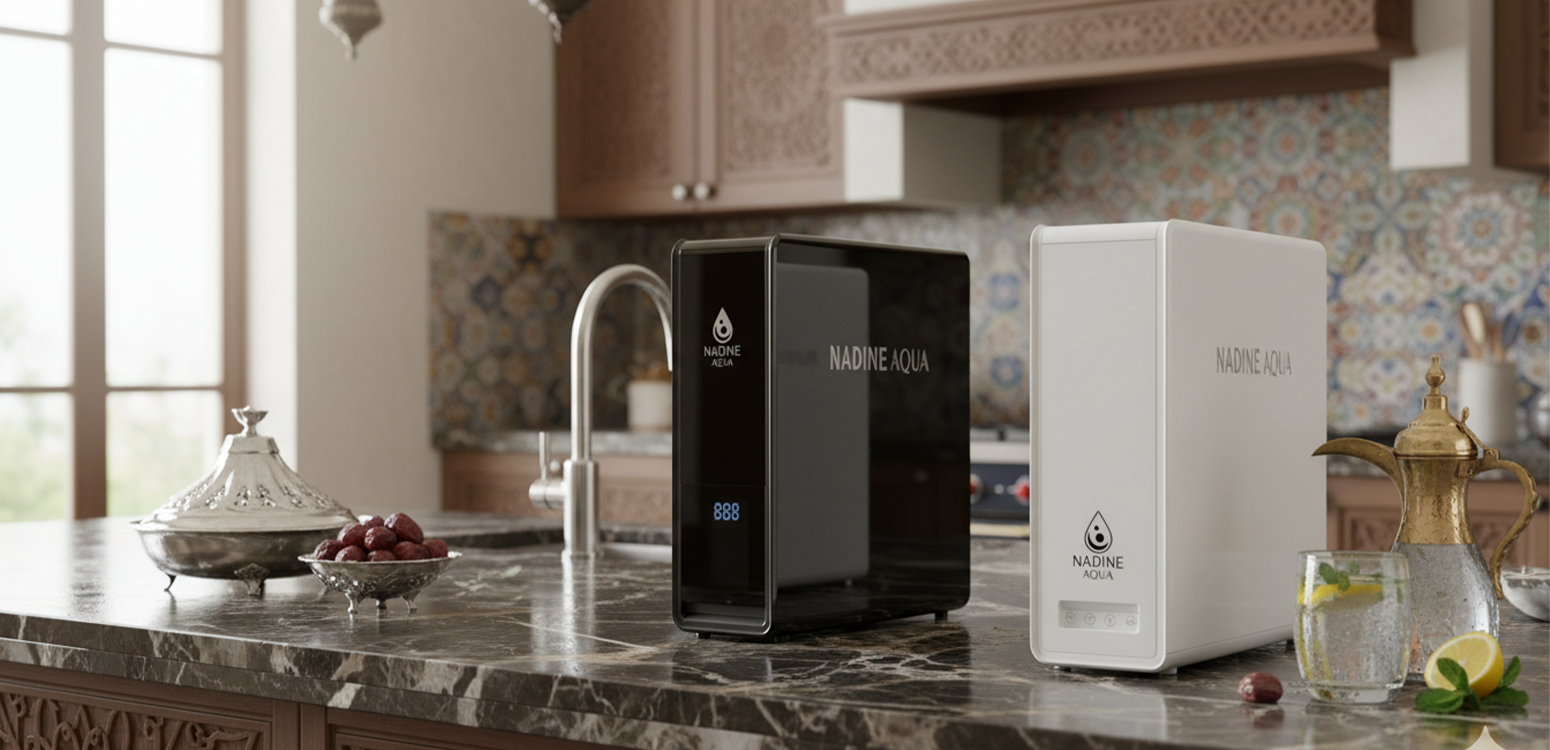
● How Nadine Aqua approaches water balance in their systems
What Does pH Actually Mean?
pH measures how acidic or alkaline a substance is on a scale of 0 to 14.
● Below 7 is acidic
● 7 is neutral
● Above 7 is alkaline
Pure water sits at exactly 7. Most healthy drinking water falls between 6.5 and 8.5. That's the range considered safe and beneficial for daily consumption by most health and water quality authorities.
Your body works hard to maintain a stable internal pH. It does this extremely well on its own. But the quality and mineral content of the water you drink every day can either support that process or add unnecessary strain to it.
This is where the difference between regular RO water and water from a pH-balanced drinking water system starts to matter.
What Is Regular RO Water?
Reverse osmosis filtration is genuinely one of the best water purification methods available. A standard RO system pushes tap water through a semi-permeable membrane that removes up to 99% of dissolved contaminants, including heavy metals, bacteria, viruses, chlorine, PFAS, and microplastics.
The result is very clean water. Impressively clean, actually.
The One Drawback of Basic RO Water
The RO process removes the bad stuff. But it also removes the good stuff, specifically the naturally occurring calcium and magnesium that give water its mineral balance and pleasant taste.
What you're left with is water that has a very low TDS (total dissolved solids), often between 5 and 20 mg/L. At that level, the water can taste flat, slightly empty, or even faintly acidic.
The pH of standard RO water often sits between 5.5 and 6.5. That puts it on the mildly acidic side.
For occasional use, this is no big deal. But for a family drinking this water every day as their primary hydration source, the consistently low mineral content and slightly acidic profile is worth thinking about.
What Does a pH-Balanced Drinking Water System Add?
A pH-balanced drinking water system goes one step further than basic RO filtration.
After the water passes through the RO membrane and removes contaminants, it flows through an additional alkaline remineralization stage. This stage uses a mineral cartridge, typically containing calcium carbonate, magnesium, and other trace minerals, to add beneficial minerals back into the filtered water in controlled amounts.
What This Changes
The remineralization stage raises the pH of the finished water to around 7.0 to 7.5. That puts it back in the neutral to mildly alkaline range that most health professionals consider ideal for daily drinking.
It also raises the TDS back to a healthy range, typically 30 to 80 mg/L. This is a level that still reflects very clean water but with the mineral content needed to taste good and support normal hydration.
The finished water from a pH-balanced drinking water system is:
● Free from harmful contaminants thanks to the RO stage
● Balanced with calcium and magnesium at healthy levels
● Neutral to slightly alkaline in pH
● Noticeably better tasting than flat, low-mineral RO water
Why This Matters Specifically for UAE Families
The UAE has a few factors that make pH-balanced water more relevant than in many other places.
The Climate Factor
In a hot climate, your family drinks more water every day than people in cooler regions. That daily volume makes the quality of what you're drinking more important, not less. When you drink more, you absorb more of whatever is in the water, whether that's beneficial minerals or the absence of them.
The Tap Water Starting Point
UAE tap water often has a high mineral content due to hard water conditions. A standard RO system strips this out, which solves the hardness problem but also removes the beneficial minerals. A pH-balanced drinking water system solves both issues at once. It removes the excess mineral load and the contaminants, then restores a healthy, balanced mineral profile.
Children and Daily Hydration
Families with young children in the UAE often think carefully about what their kids drink every day. Water with a balanced mineral content and neutral pH supports healthy hydration better than flat, acidic RO water. The difference is particularly relevant for children who drink large volumes of water relative to their body weight.

pH-Balanced Water vs. Regular RO Water: A Side-by-Side Look
Let's put this in a simple, clear comparison.
| Factor | Regular RO Water | pH-Balanced RO Water |
|---|---|---|
| Contaminant removal | Excellent | Excellent |
| pH level | 6.5 to 7.5 (mildly acidic) | 7.5 to 9 (neutral to alkaline) |
| TDS level | 5 to 20 mg/L | 30 to 80 mg/L |
| Mineral content | Very low | Balanced with Ca and Mg |
| Taste | Flat, slightly empty | Clean, fresh, pleasant |
| Long-term suitability | Less ideal as sole source | Better suited for daily use |
The contaminant removal is the same. The difference is in what the water gives back to you after filtration.
Does Alkaline Water Have Real Health Benefits?
This is where it's worth being straightforward with you.
The claims around highly alkaline water (pH 8 to 9.5) and dramatic health benefits are not strongly supported by clinical research. Your body regulates its own internal pH tightly regardless of what you drink. Extremely alkaline water is unlikely to significantly change your body's chemistry.
However, water with a neutral to mildly alkaline pH and a healthy mineral content is a different conversation. This isn't about marketing. It's about:
● Drinking water that tastes genuinely good, so your family actually drinks enough of it
● Getting a small but consistent daily contribution of calcium and magnesium
● Avoiding the mildly acidic profile of flat RO water as your only daily hydration source
A good pH-balanced drinking water system doesn't claim to cure anything. It simply gives you cleaner, better-tasting, better-balanced water. That's the honest version of the benefit.
What to Look for in a pH-Balanced Drinking Water System
If you're ready to invest in a system that goes beyond basic RO filtration, here's what actually matters.
Multi-Stage Filtration Including RO
The pH balance only means something if the water is properly clean first. Look for a system with full multi-stage RO filtration before the remineralization stage. At least 8 to 11 stages is the right benchmark.
Quality Mineral Cartridge
The remineralization stage should use a quality mineral cartridge that reliably raises pH to 7.0 to 7.5 and adds calcium and magnesium in measured amounts. Ask about the specific minerals added and the output TDS range.
UV Sterilization
For UAE homes where building water storage can introduce bacteria, UV sterilization after the RO stage adds a meaningful layer of protection that basic systems skip.
Tankless Design
A tankless system filters water in real time. No storage tank means no sitting water, better hygiene, and significantly less under-sink space used.
Certifications
Look for NSF, CE, or UKCA certification. These independent standards confirm that the system performs as advertised rather than relying on brand claims alone.
How Nadine Aqua Delivers pH-Balanced Water
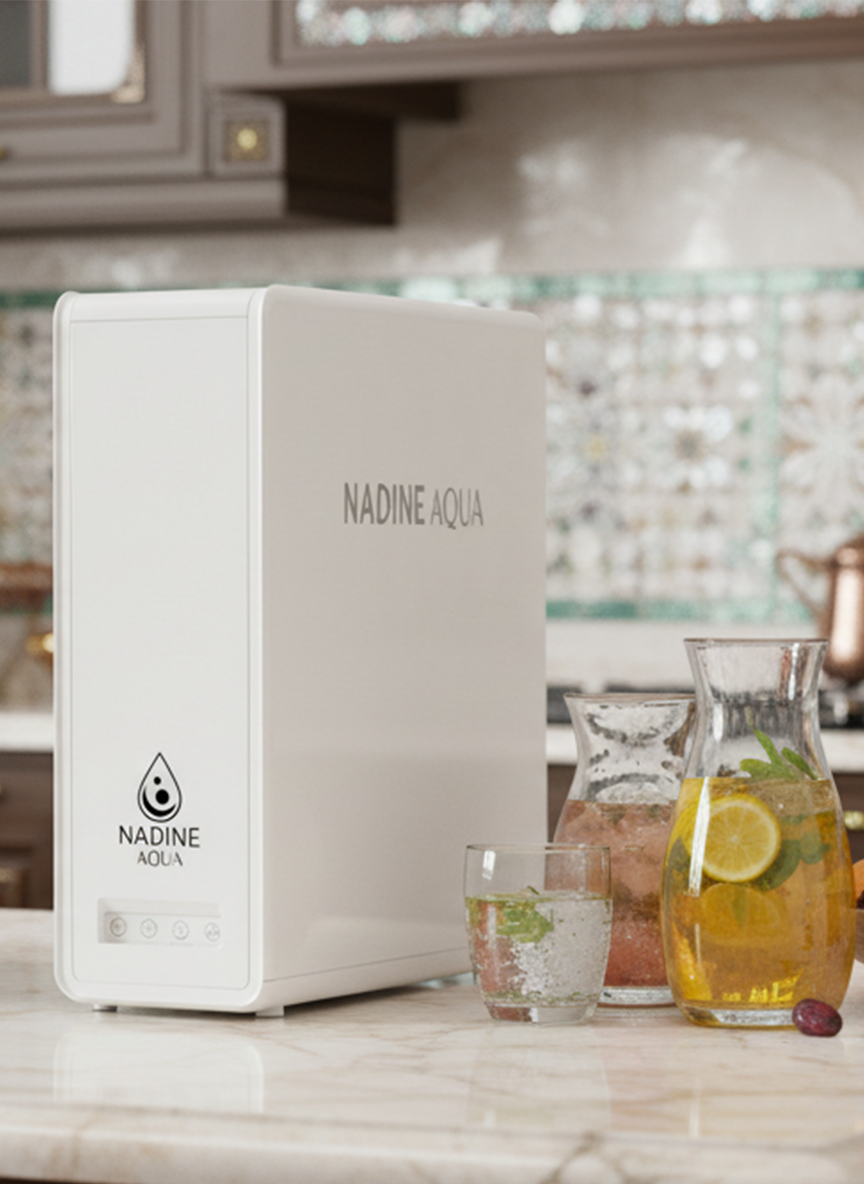
Nadine Aqua's systems offer a complete pH-balanced drinking water system for UAE homes.
Our 10 to 11-stage filtration process includes full RO purification, UV sterilization, and an alkaline remineralization stage that raises the pH of the finished water to a natural, healthy range.
The remineralization stage restores calcium and magnesium in controlled amounts. The output water typically sits at a TDS of 30 to 80 mg/L with a pH of 7.0 to 7.5. Clean, balanced, and genuinely good to drink every day.
Our compact, tankless design saves over 70% of under-sink space compared to traditional bulky RO units. Smart faucets on Pro models display real-time TDS readings so you can always see what your family is drinking. Flow rates reach up to 1,000 GPD on top models, so there's never a wait at the tap.
Systems start from AED 2,150 and are available at nadineaqua.ae.
Final Thoughts
Regular RO water is clean. But a pH-balanced drinking water system gives you clean water that also tastes great and supports healthy daily hydration with a proper mineral balance.
For families in the UAE drinking large volumes of water every day in a hot climate, that difference is real and worth the investment.
Explore Nadine Aqua's range of pH-balanced RO systems at nadineaqua.ae.
Frequently Asked Questions
1. Can pH-balanced water help with digestion issues?
Staying well hydrated with balanced, mineral-rich water supports healthy digestion generally. Drinking water with a neutral pH is easier on the stomach than mildly acidic flat RO water, particularly for people who are sensitive to acidic foods and drinks in their daily diet.
2. How often does the remineralization cartridge need replacing in a Nadine Aqua system?
The remineralization cartridge typically needs replacing once or twice a year depending on your household's water usage. Nadine Aqua Pro models track filter life and send you an alert when a replacement is due so there's no guesswork involved.
3. Is pH-balanced water safe for people with kidney conditions?
People with kidney conditions or specific health concerns should always consult their doctor before making changes to their drinking water. A health professional can advise on the ideal mineral content and pH range for your specific needs based on your individual medical history.