Is an RO Filter Necessary in Dubai? Here's What Homeowners Should Know
It's a question almost every homeowner in Dubai asks at some point.
Do I actually need an RO filter in Dubai? Or is tap water here good enough to drink without one?
The honest answer isn't just a yes or a no. It depends on what's in your water, how your building's plumbing works, and what you want for your family's daily health.
So let's walk through it properly.
In this blog, we'll cover:
● What Dubai tap water actually contains
● Why "safe" and "ideal for daily drinking" are two different things
● What an RO filter in Dubai removes that standard treatment doesn't
● Who benefits most from installing one
● What to look for if you decide to get one
Where Does Dubai's Tap Water Come From?
Dubai gets most of its drinking water from desalination plants. The emirate sits in one of the most water-scarce regions on the planet, so desalination, which removes salt from seawater, is the primary method of producing drinkable water at scale.
The water that leaves the desalination plant is technically clean. It meets the standards set by the Dubai Electricity and Water Authority (DEWA).
But here's what most people don't realize.
The journey from the treatment plant to your kitchen tap is long. Water travels through a network of distribution pipes, into large rooftop or underground storage tanks in your building, and then through the building's internal plumbing before it reaches you.
Every step of that journey is an opportunity for the water quality to change.
What's Actually in Dubai Tap Water?
Let's look at what Dubai tap water typically contains by the time it reaches your glass.
Chlorine
Water suppliers add chlorine to kill bacteria during distribution. This is standard practice and necessary for public health. But chlorine affects the taste and smell of your water noticeably. It also reacts with organic matter in pipes to form disinfection by-products including trihalomethanes (THMs), which some research links to long-term health concerns at high exposure levels.
Dissolved Minerals and Hard Water
Even though desalination removes most mineral content initially, water picks up dissolved calcium and magnesium as it travels through distribution infrastructure. This makes Dubai tap water moderately hard to hard in many areas. Hard water leaves limescale in kettles, affects the taste of tea and coffee, and contributes to appliance wear over time.
Sediment and Rust
Older building plumbing and storage tanks can introduce sediment, rust particles, and fine debris into your water supply by the time it reaches your tap. This is particularly common in older residential buildings and villas with aging internal pipework.
Heavy Metals
Traces of lead, copper, and other heavy metals can leach into water from pipes and fittings inside your building. Water companies treat water to reduce corrosion in mains pipes, but internal building plumbing is outside their control.
Microplastics
Studies around the world have found microplastics in tap water supplies. The UAE is no exception. These particles enter water from plastic pipes, storage tanks, and environmental contamination. The long-term health effects of microplastic ingestion are still being studied, but the direction of research is increasingly concerning.
PFAS
PFAS, or per- and polyfluoroalkyl substances, are synthetic chemicals that don't break down naturally. They've been found at low but detectable levels in water supplies globally. Standard water treatment does not fully remove them. An RO filter in Dubai is one of the most effective residential tools for reducing PFAS in drinking water.
Is Dubai Tap Water Safe to Drink?
Dubai tap water is safe to drink by official regulatory standards. DEWA monitors water quality consistently and Dubai tap water meets those standards.
But it's worth understanding what "safe" means in this context.
Safe means the levels of contaminants measured fall within legally permitted limits. It does not mean zero contaminants. It does not mean ideal for long-term daily consumption. And it does not account for what happens to water quality inside your specific building's plumbing and storage system, which is outside the water authority's control once water enters your property.
Many long-term Dubai residents and health-conscious families choose to go beyond the minimum standard. Not because tap water is dangerous, but because a good RO filter in Dubai makes their daily drinking water genuinely better in ways that matter over time.
What Does an RO Filter Actually Remove?
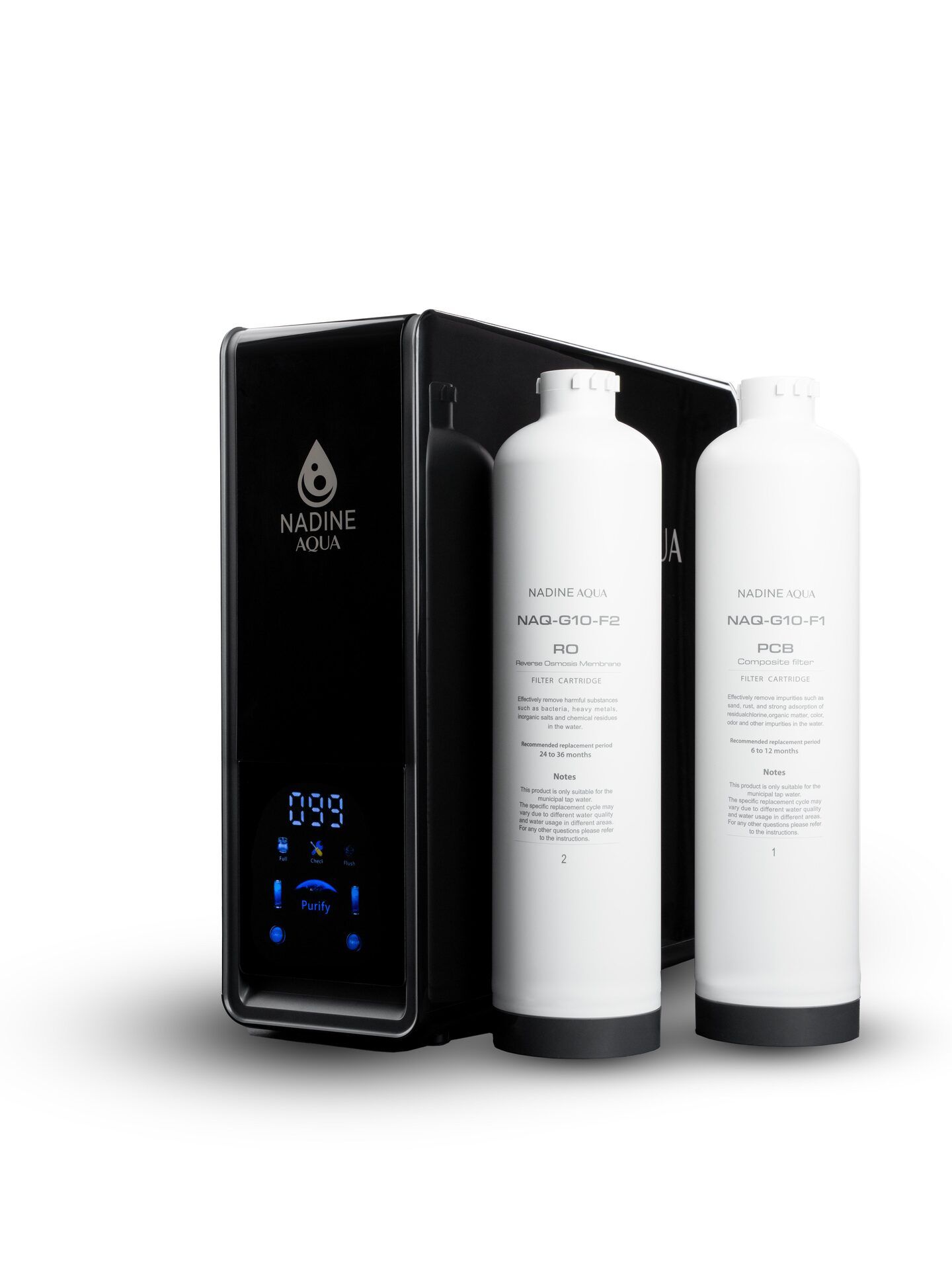
Reverse osmosis works by pushing water through a membrane with extremely fine pores, small enough to block virtually all dissolved contaminants.
A quality RO filter in Dubai removes:
● Dissolved minerals causing hardness and limescale
● Chlorine and chloramine affecting taste and smell
● Lead and other heavy metals from pipes and fittings
● Bacteria and viruses
● PFAS and other synthetic chemical compounds
● Microplastics
● Fluoride
● Nitrates and nitrites
● Sediment and particulates
The TDS (total dissolved solids) of Dubai tap water often sits between 150 and 300 mg/L. After passing through a quality RO filter in Dubai, the TDS typically drops to 10 to 50 mg/L. That's a reduction of over 90% in dissolved content.
The difference in taste is immediate and noticeable. And the difference in what your family consumes every day is significant over months and years.
Who Benefits Most from an RO Filter in Dubai?
An RO filter in Dubai makes the most practical sense for certain households. Here's who benefits most.
Families with Young Children
Children drink more water relative to their body weight than adults. They're also more sensitive to contaminants, including lead, chlorine by-products, and heavy metals. Families with babies, toddlers, or young children benefit significantly from filtered drinking water at home.
Households in Older Buildings
If your building is more than 10 to 15 years old, the internal plumbing and rooftop storage tanks may be introducing contaminants into your water that the mains supply doesn't contain. An RO filter in Dubai addresses the issue at the point of use, at your kitchen tap, regardless of what's happening in the building's plumbing.
People Spending Heavily on Bottled Water
If your household spends AED 100 or more per month on bottled water, an RO filter in Dubai pays for itself within one to two years. The ongoing cost of filtered water from an under-sink system is a fraction of the cost of bottled water over time.
Health-Conscious Residents
If you care about what goes into your body daily, filtered water is a straightforward and impactful choice. Removing chlorine, PFAS, microplastics, and heavy metals from your daily water consumption is a low-effort, high-value health decision.
Expats New to Dubai
Many expats arriving in Dubai feel uncertain about tap water quality. An RO filter in Dubai gives you confidence in your drinking water from day one, without relying on bottled water deliveries to manage the uncertainty.
What to Look for in an RO Filter for Dubai Homes
If you decide an RO filter in Dubai is right for your home, here's what genuinely matters when comparing options.
Multi-Stage Filtration
Look for systems with 8 to 11 stages, including sediment pre-filtration, multiple activated carbon stages, the RO membrane, UV sterilization, and alkaline remineralization. Each stage handles a different category of contaminant.
UV Sterilization
For Dubai apartments with rooftop water tanks, UV sterilization after the RO membrane adds a critical kill step for any bacteria that enter the water downstream of the treatment plant. Don't skip this feature.
Tankless Design
A tankless system filters water in real time as you open the tap. No stored water sitting in a pressurized tank. Fresher water, less space used, and better hygiene overall.
Smart Monitoring
A digital faucet displaying real-time TDS readings lets you confirm the system is working correctly every time you use the tap. Filter life alerts remove the need to track maintenance manually.
Certified Performance
NSF, CE, or equivalent third-party certification confirms the system performs as advertised. Don't rely on brand claims alone when choosing a system for your family's daily drinking water.
How Nadine Aqua Fits the Dubai Market
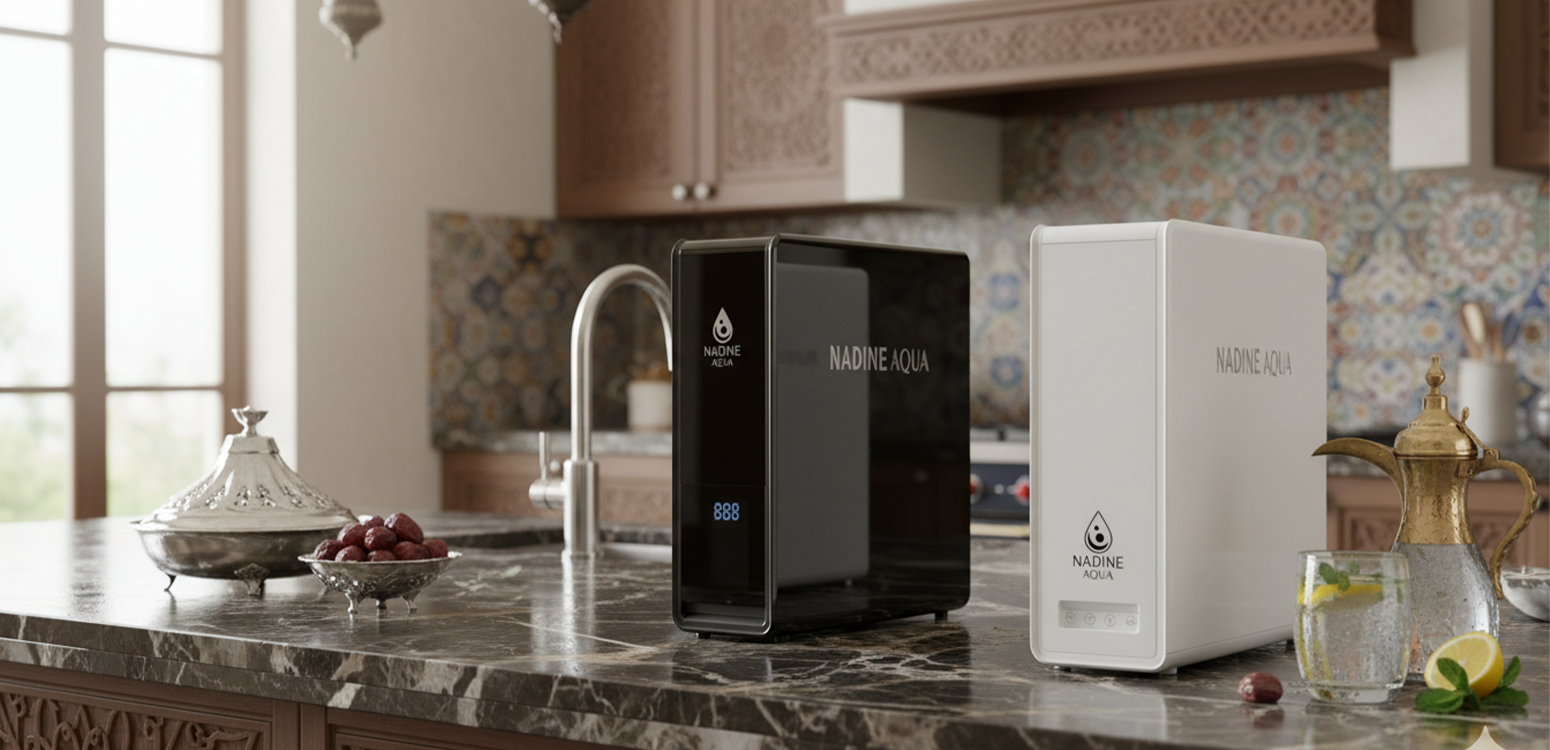
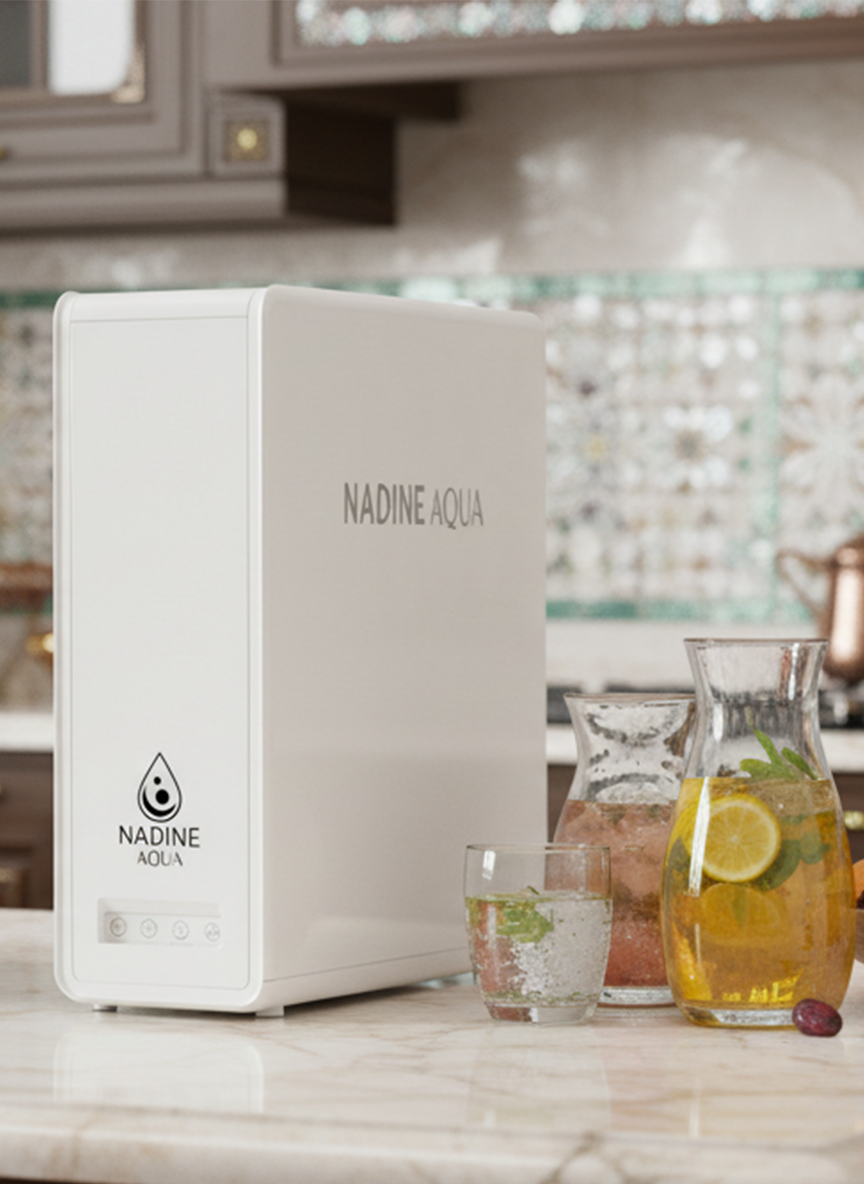
Nadine Aqua builds their RO filter systems specifically for homes in Dubai and across the UAE. Their systems address the full range of water quality concerns relevant to Dubai tap water.
Their 10 to 11-stage filtration process covers sediment removal, activated carbon pre-filtration, a high-rejection RO membrane, UV sterilization, and alkaline remineralization. Output water sits at a TDS of 30 to 80 mg/L with a balanced pH of 7.0 to 7.5.
Their compact, tankless design saves over 70% of under-sink space. Smart Pro models display real-time TDS and send filter life alerts automatically. Flow rates reach up to 1,000 GPD on top models so there's never a wait at the tap.
Final Thoughts
Dubai tap water meets official safety standards. But an RO filter in Dubai gives your family something that regulatory minimums don't: genuinely clean, balanced, great-tasting water every single day.
For families with children, residents in older buildings, and anyone spending money on bottled water each month, the case for installing one is clear. The technology is compact, affordable, and built for exactly the water conditions found across Dubai.
Explore Nadine Aqua's range of RO filters for Dubai homes at nadineaqua.ae.
Frequently Asked Questions
1. Does Boiling Dubai Tap Water Make It Safe Enough?
Boiling kills bacteria. But it doesn't remove chlorine by-products, heavy metals, PFAS, microplastics, or dissolved minerals. In fact, boiling concentrates some minerals as water evaporates. Boiling is helpful for biological safety but it's not a substitute for proper filtration.
2. Are Fridge Filters Good Enough?
Fridge filters use basic carbon filtration to improve taste and reduce some chlorine. They don't remove heavy metals, PFAS, microplastics, or dissolved minerals at meaningful levels. They're better than nothing but fall well short of what a proper RO filter in Dubai delivers.
3. Does RO Remove Beneficial Minerals?
Yes, a basic RO system does remove calcium and magnesium along with contaminants. This is why quality systems include an alkaline remineralization stage after the RO membrane. This stage adds beneficial minerals back in controlled amounts, restoring a healthy pH of around 7.0 to 7.5 and improving the taste of the finished water significantly.
4. How Much Under-Sink Space Does an RO System Need?
Traditional RO systems with large pressurized storage tanks take up most of an under-sink cabinet. Modern compact, tankless systems are dramatically smaller. Advanced designs save over 70% of under-sink space compared to traditional units, making them practical for virtually any Dubai kitchen, including apartments with limited cabinet space.