What Does UV Sterilisation Do That Traditional Water Filters Cannot?UV water purification systems
What Traditional Water Filters Do (And What They Miss)
A conventional water filter works by passing water through a filter medium, activated carbon, for example, that traps particles and absorbs certain chemicals. This does a good job of:
- Removing sediment and particulates
- Reducing chlorine and chloramines
- Improving taste and odour
- Reducing some heavy metals
What most traditional filters do not reliably do is eliminate microorganisms such as bacteria, viruses, and protozoa that can survive in filtered water even after chemical and sediment removal.
This is the gap that UV water treatment fills. However, the most effective residential water purification systems do not rely on UV technology alone. Modern reverse osmosis systems combine sediment filtration, carbon filtration, reverse osmosis membranes, and UV sterilisation to address a broader range of contaminants while also providing microbial protection.
What Does UV Sterilisation Actually Do to Water?
UV sterilisation uses ultraviolet light at a specific wavelength to damage the DNA of microorganisms in water. When a microorganism passes through a UV chamber, the UV light disrupts its ability to reproduce. A microorganism that cannot reproduce cannot cause infection.
This process works against:
- Bacteria (including E. coli and coliforms)
- Viruses
- Protozoa such as Giardia and Cryptosporidium
Cryptosporidium, in particular, is notoriously resistant to standard chemical disinfection with chlorine. UV treatment handles it effectively.
UV water purification systems do not add chemicals to the water. There is no chlorine, no iodine, no disinfectant byproducts. The water goes through the UV chamber, microorganisms are neutralised, and the water continues through to your tap.
Does UV Treatment Change the Taste or Chemistry of Water?
No, and this is one of the reasons UV water filtration systems in the UAE appeal to households that want pure-tasting water without any chemical additions.
UV treatment does not alter the chemical composition of water. It does not change pH, does not add taste or odour, and does not leave residual disinfectants in the water. The only thing it changes is the viability of microorganisms.
This makes UV water systems in the UAE well-suited for households where water taste is important, or where concerns about disinfectant byproducts are a factor.
Where Does UV Sterilisation Fit in a Multi-Stage Water System?
UV sterilisation is most effective when it forms part of a multi-stage water purification system. While UV technology is highly effective at neutralising microorganisms, it does not remove sediment, dissolved salts, heavy metals, chlorine, PFAS, fluoride, or other chemical contaminants.
This is why advanced home drinking water systems typically combine multiple purification technologies that work together to improve water quality at every stage.
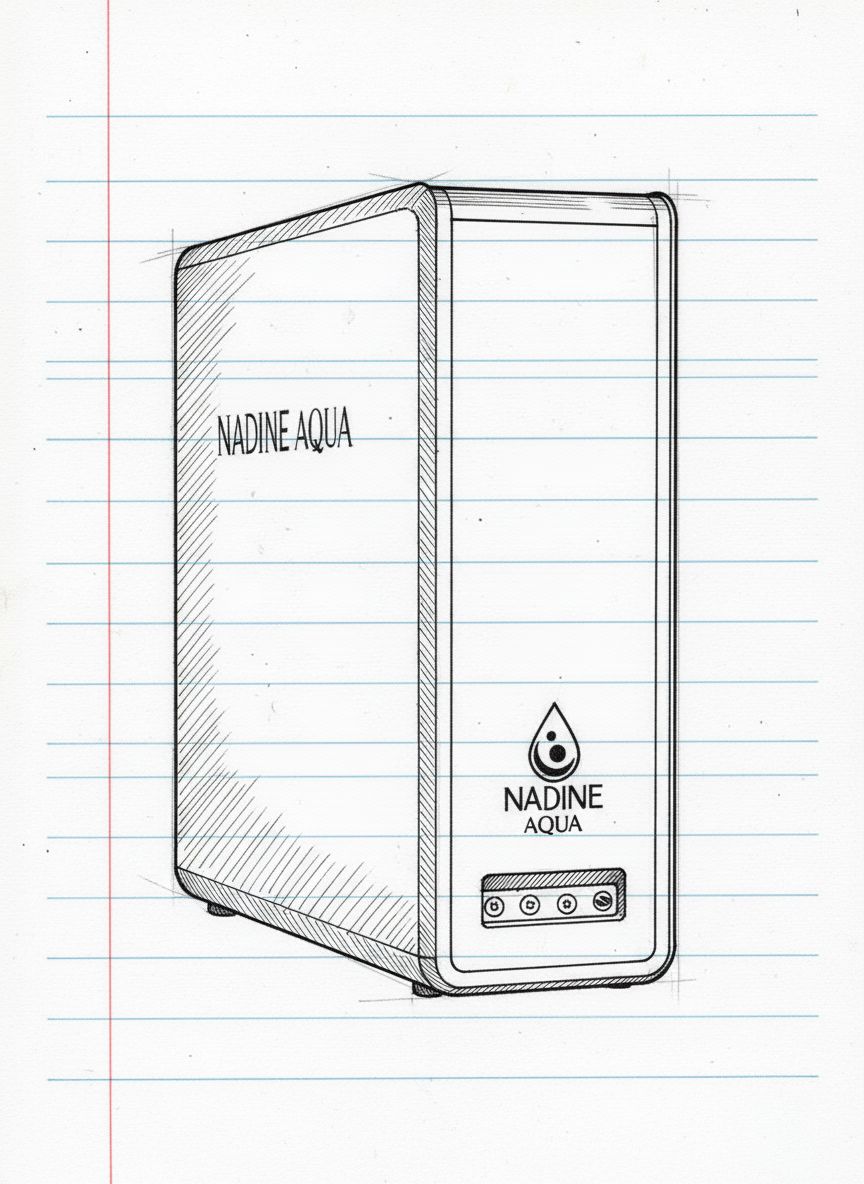
The well-designed multi-stage water filtration system by Nadine Aqua typically works like this:
· Sediment filtration removes particles and turbidity
· Carbon filtration reduces chlorine, odours, and organic compounds
· Reverse osmosis filtration removes dissolved contaminants, heavy metals, fluoride, PFAS, and other impurities
· UV sterilisation neutralises bacteria, viruses, and microorganisms
· Mineral balancing or polishing stages improve taste and water quality
In this sequence, the UV stage receives already-clarified water, which allows it to work at maximum effectiveness.
Is UV Technology Used in Professional Water Treatment?
Yes, UV disinfection is widely used in municipal water treatment plants, hospitals, food processing facilities, and pharmaceutical manufacturing. The technology is well-established and highly effective when properly designed and maintained.
The same principles that make UV technology effective at industrial scale apply to residential UV drinking water systems in the UAE. The difference is scale, not effectiveness.
Why Many UAE Households Choose UV Sterilisation as Part of a Reverse Osmosis System
For households looking for a complete drinking water solution, UV sterilisation is often combined with advanced reverse osmosis filtration rather than used on its own.
A modern multi-stage reverse osmosis system can help reduce:
· Sediment and suspended particles
· Chlorine and unwanted tastes or odours
· Heavy metals such as lead
· Fluoride and PFAS compounds
· Bacteria, viruses, and other microorganisms through UV sterilisation
By combining multiple treatment stages within a compact under-sink water filtration system from Nadine Aqua, homeowners can enjoy clean, great-tasting water directly from the tap without relying on bottled water.
FAQs
What does UV sterilisation do in a water purification system?
UV sterilisation uses ultraviolet light to damage the DNA of bacteria, viruses, and protozoa in water, preventing them from reproducing and making them incapable of causing infection. It neutralises microorganisms that traditional filters do not reliably remove, without adding any chemicals to the water.
Can UV treatment remove microorganisms from drinking water?
Yes. UV water purification systems are effective against a wide range of waterborne microorganisms, including bacteria like E. coli, viruses, and protozoa like Giardia and Cryptosporidium. For best results, UV treatment should be used as part of a multi-stage system that includes pre-filtration to clarify the water before it reaches the UV chamber.
Why is UV technology used in water purification systems?
UV technology is used because it neutralises microorganisms without adding chemicals to the water, does not affect taste or odour, and is effective against organisms that resist chemical disinfection. It provides a clean, chemical-free method of microbial protection that complements filtration stages which focus on sediment and chemical contaminant removal.
Does UV sterilisation remove heavy metals from water?
No. UV sterilisation is designed to neutralise microorganisms such as bacteria, viruses, and protozoa. Heavy metals, dissolved salts, fluoride, and many chemical contaminants require additional treatment technologies such as reverse osmosis filtration.
Is UV sterilisation enough on its own for drinking water?
UV technology is highly effective against microorganisms, but it does not remove sediment, chlorine, heavy metals, PFAS, fluoride, or dissolved contaminants. Many households choose a multi-stage reverse osmosis system with UV sterilisation for more comprehensive water treatment.
What is the difference between UV purification and reverse osmosis?
UV purification targets microorganisms by neutralising bacteria, viruses, and protozoa. Reverse osmosis removes dissolved contaminants, heavy metals, salts, and many chemical compounds. The two technologies are often combined to provide broader protection and improved water quality.
Why do some home water systems combine RO and UV technology?
Combining reverse osmosis and UV sterilisation allows different contaminants to be addressed at different stages. RO filtration focuses on dissolved impurities and chemical contaminants, while UV technology provides an additional layer of protection against microorganisms.
Does UV sterilisation affect water taste?
No. UV treatment does not change the taste, smell, pH, or chemical composition of water. Improvements in taste are typically achieved through filtration stages such as activated carbon and reverse osmosis.
How often does a UV water purifier need maintenance?
Maintenance requirements depend on the system design and manufacturer recommendations. UV lamps typically require periodic replacement, while filtration components such as sediment and carbon filters require routine maintenance to maintain performance.